
Contact Details: Scotch Macaskill, Dirt Road Traders, Currys Post Road, Howick, KwaZulu-Natal, South Africa. Tel: +27 (0)82 578 2329. Privacy: Your privacy is guaranteed. See our Privacy Policy for more. This site accepts advertising and other forms of compensation - see Disclosure and Advertising for details. Site updated: 2022. Copyright © 2002 - 2022 Scotch Macaskill

| |||||||||||||||||||||||||||||||
|
|||||||||||||||||||||||||||||||
|
SEE ALL
|
WildCam Africa Brings Wildlife to Your PC or Tabletby Scotch MacaskillWant to view some real African wildlife from the comfort of your home or office? Well, all you need do is turn on your computer, sit back and take a "virtual" safari to Pete's Pond in Botswana's Mashatu Game Reserve - thanks to WildCam Africa from Mashatu Game Reserve. Update April 2013: Times change and so do the links to websites, but as of April 2013, I was able to watch action from here: Pete's Pond Live Feed or from this Facebook page. Update December 2008: The webcam now operates year round, in both the wet and dry seasons. During a visit to Mashatu Game Reserve in December 2008, we visited the hide at Pete's Pond from which the webcam is operated and spent some time chatting to Afke, the camera operator. See our blog post, Visit to WildCam Africa to read more about Afke and her role in bringing live video footage to wildlife enthusiasts around the world. Update August 2008: Good news is that the webcam from WildCam Africa is operational and, as it's again nearing the end of the dry season (winter) in Botswana, there should be plenty of wildlife "traffic" visiting Pete's Pond for you to view on your PC. Pete's Pond - Background InfoIt's near the end of the dry season in Mashatu, a 30,000-hectare (74,000-acre) game reserve in the arid eastern corner of Botswana.Soon the rains will (or should) come. But until those first, fat drops plop into the dry, dusty soil, any remaining water acts like a magnet for thirsty animals. And one such source of water is Pete's Pond, a small dam in the south of the reserve. Previously used as a viewing spot by visitors on safari in Mashatu, Pete's Pond has been taken over by National Geographic. 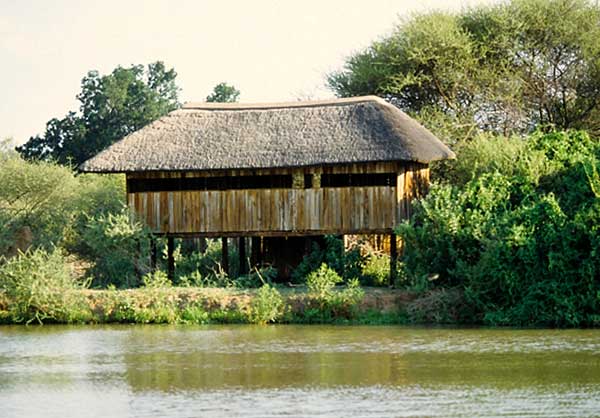
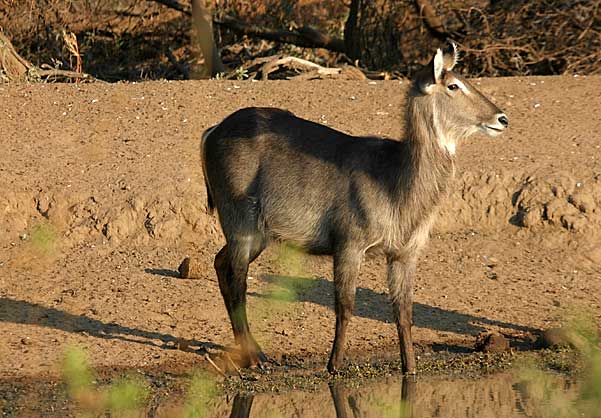
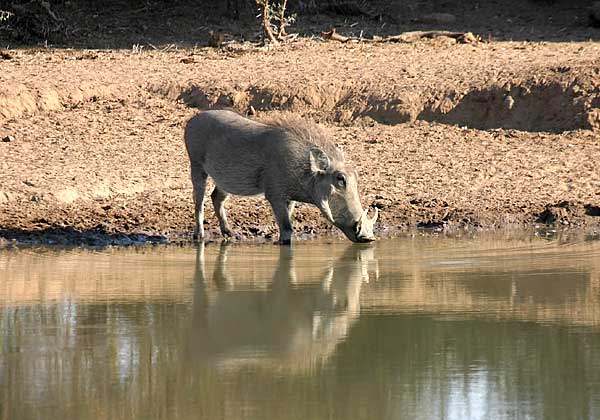
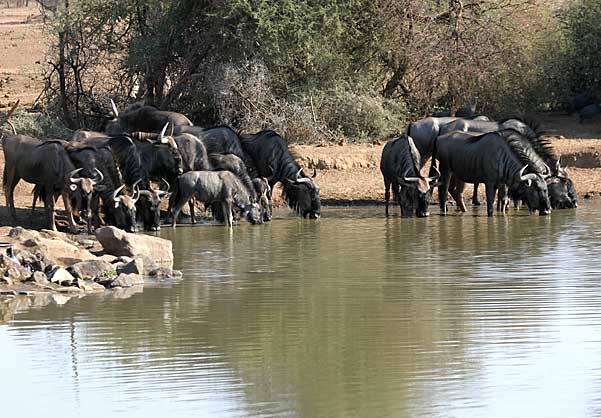
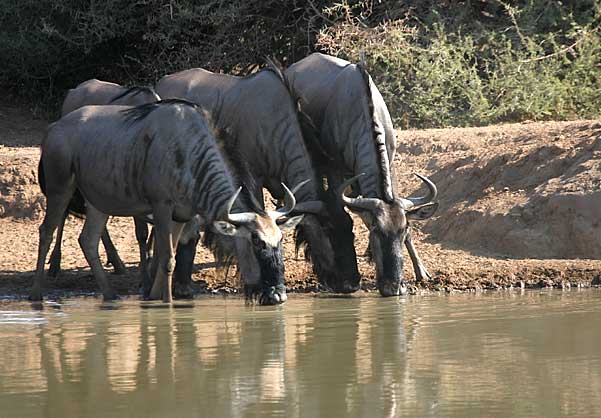
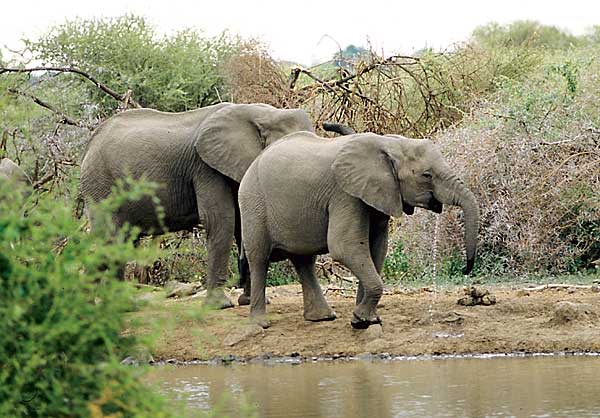
Pete's Pond - Click to enlarge. So at the moment there're no visitors in the thatched "hide" (left) where eco-tourists would normally sit quietly in the cool shade, watching the passing parade. Instead, there's now a video camera permanently recording the activity along the water's edge - elephants wallowing and drinking, wildebeest and antelope stretching to sip nervously, guineafowl scurrying on the banks. The camera is either operated by volunteers or by remote control.
You can watch this fascinating wildlife scenario unfold on your computer screen, day and night, brought to you by an always-on, satellite-to-website video camera. Even if there're no pictures of interest, you can listen to the genuine sounds of the African bush, partiuclarly the many resident and visiting birds. I've already spent a few hours watching the action, but have had to curtail my viewing - it's just too damn addictive and can eat into one's time if you're not careful! Unlike the older webcams where you had a fuzzy still image that "refreshed" every 30 or 60 seconds, this is streaming video, so it's like watching a mini movie. The camera is usually operated by volunteers, who will zoom in on the action, so you're almost guaranteed of seeing animals and birds "live", particularly in the mornings and late afternoons (see comparative times below).
A Visit to Pete's Pond
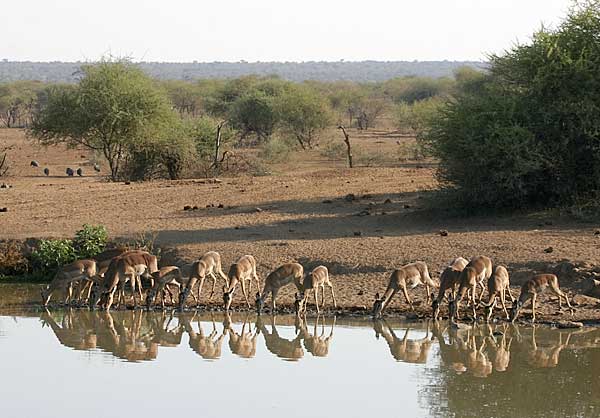
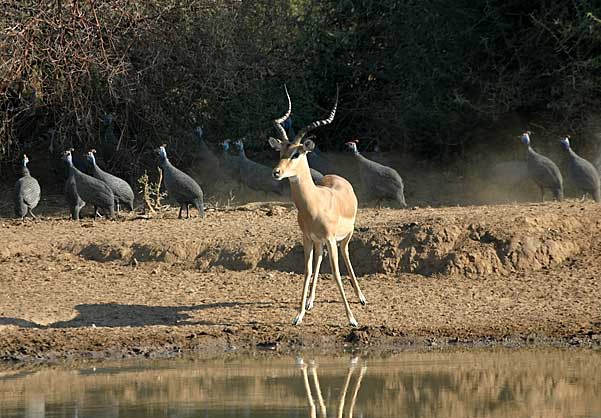
The first to arrive were the impala, skittish as ever and easily alarmed. Even a flock of guineafowl, energetically scratching for food near the water's edge, would periodically cause a ripple of panic among the impala. Such is the life of an antelope in lion and leopard country.
|
||||||||||||||||||||||||||||||
|
Below is a panorama looking towards the hide at Pete's Pond, taken in January 2006. If any nostalgic "Pondies" would like to downlaod
a full-size image (5800 x 1600 pixels, file size 600KB) you can do so from
here.
Return to Wildlife Articles
|
|||||||||||||||||||||||||||||||